Local Programs: what this guide covers in Massachusetts
We cover the roof and siding questions that come up around a home sale in Massachusetts. We also say plainly where that scope stops.
The questions this guide takes on
This guide answers the roof and siding questions a buyer or seller meets when a house changes hands in the Dracut and Lowell area of Massachusetts. We read the published rules, check each figure against its source and say what it can and cannot tell a reader. The questions are narrow on purpose: whether a roof needs a repair, a replacement or only a disclosure, what a written contract has to say, and what the paperwork on an older roof or siding job should show. Each one is answered from a rule or a published source, not from a feeling about how a roof looks. Where the answer depends on the town or on the house, we say so instead of guessing.
We leave other things to others. We do not price a particular job, judge the condition of a particular roof, or stand in for an inspector or a contractor. We keep no directory of businesses that do this work; the home page names the one local roofer we point readers to, with its Google listing as Google shows it. A roof that needs a look needs a written inspection, and the way to weigh its findings is in the roof decision helper on the Resources page. That helper is where the repair, replace or disclose question gets its answer.
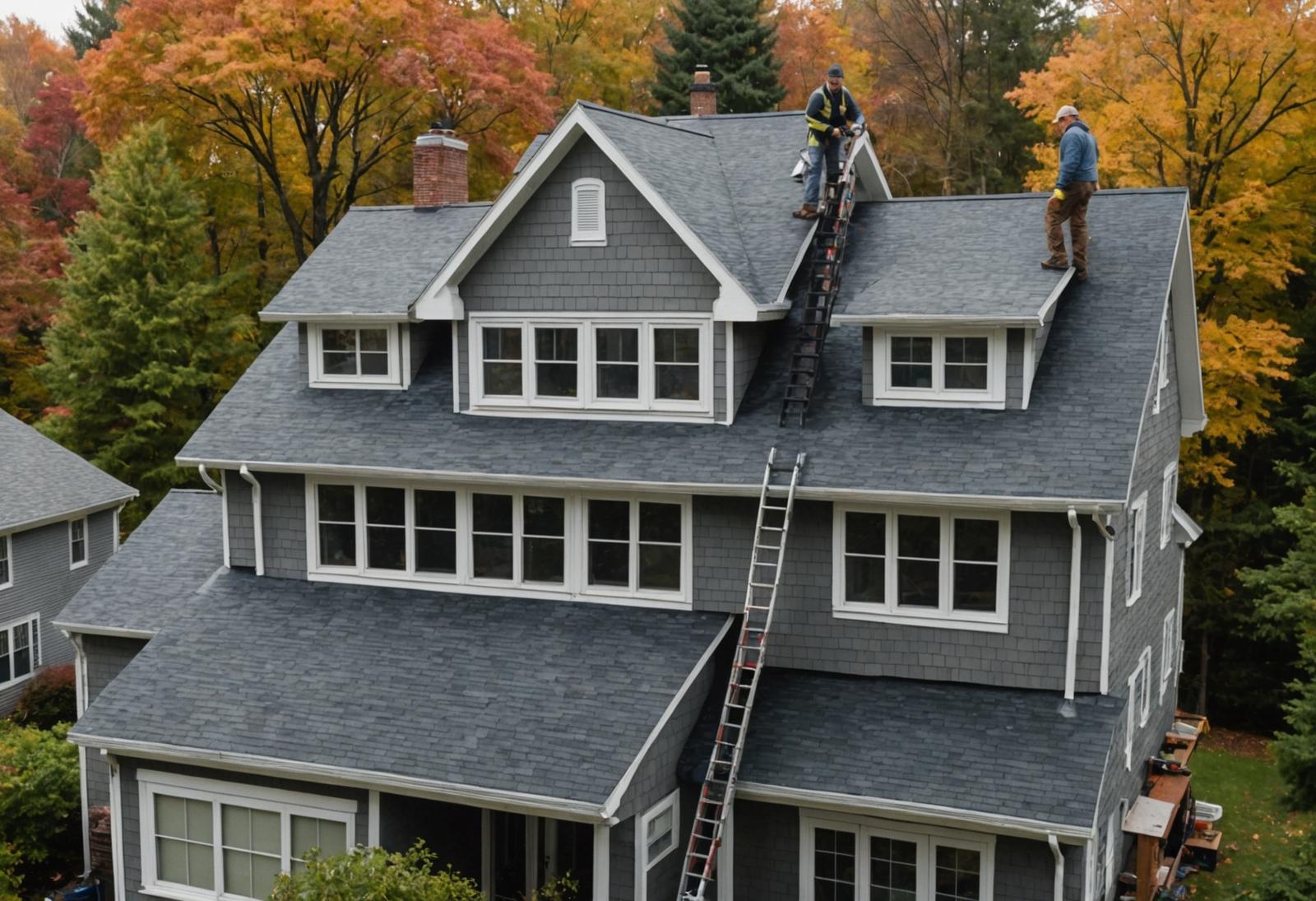
A roof that looks sound from the street still needs a written look at its condition before anyone decides what it needs.
Siding questions have a home too
Choosing, installing, cleaning and repairing vinyl siding are all covered in the library kept by the trade body formerly known as the Vinyl Siding Institute. The library is written to help homeowners choose, install, clean or repair vinyl siding, so a reader can use it without a contractor in hand. More at the Polymeric Exterior Products Association.

Where readers get stuck: permits and the written contract
Two questions come up when people arrange roof work: who pulls the building permit, and whether the agreement is in writing. Massachusetts requires a home improvement contract above $1,000 to be in writing. The written contract must say which permits are needed and that the contractor is obliged to obtain them. If a homeowner pulls their own permit instead, that homeowner is excluded from the state guaranty fund. The rule sits in General Laws, Chapter 142A, Section 2.
Local rules differ by town. Lowell's permit page says a building permit is required under the state building code, and it lists roofing and siding among the work that needs one. Dracut's page states the general rule that a permit is needed to repair or alter a building. Its application list asks for the contractor's Construction Supervisor's License, Home Improvement Contractor registration and a workers' compensation certificate. It does not name roofing or siding, so a reader in Dracut should confirm the roof work with the Building Department. The two town pages are Lowell's building permit page and Dracut's building permit page.
Using what you find, in order
Four points, taken in order, will get a reader further than any single figure. Each one decides whether the next is worth doing, so a quote that fails the first check does not need the rest. The steps assume a roof is already in view and a quote is already on the table. None of them asks a reader to climb onto the roof.
- Read the quote. It should be in writing, name the contractor's registration number, and state which permits are needed and who will get them.
- Confirm the permit route with the town. Ask whether the contractor or the homeowner pulls the building permit, since a homeowner who pulls it is outside the guaranty fund.
- Establish what is already on the roof: how many layers, and whether the deck sags or shows gaps.
- Only then compare numbers. Set a written estimate against the published range below, and ask why it sits where it does.
A short explainer to watch before you call anyone
This video comes from a roofing business's own channel, so treat it as one trade's view of the subject. It covers what to check when choosing a roofing contractor, including the questions worth asking before anything is signed. Watch it for the checklist, and weigh its claims against the written sources on this page. A video is a starting point for the reading, not a substitute for it.
Four numbers worth holding onto
- $10,000 to $36,000
- The published range for replacing a whole roof in Massachusetts. It is a pricing-guide estimate, not a bid, and size, pitch and material move a roof within it. Source: Fixr, cost to replace a roof in Massachusetts, updated January 2025
- About 20 years
- The life generally expected of three-tab asphalt shingles. Premium shingles are advertised at 40 to 50 years, which the source treats as an expected life rather than a measured one. Source: Fine Homebuilding, will your next asphalt roof last a lifetime
- 24 inches
- Where the adopted code designates a history of ice along the eaves, the ice barrier runs at least this far inside the exterior wall line. Overhang and wall thickness lengthen the run up the slope. Source: Town of Hudson, ice and water detail guide
- 2 layers
- The most roof coverings most codes allow on one building. Tear-off is the safer route when a roof already has two layers, and local codes set the permitted number. Source: Asphalt Roofing Manufacturers Association, reroofing: replacement vs. recover